
Genjutsu
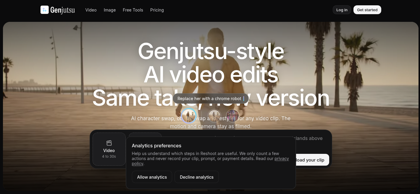
What is Genjutsu ?
Genjutsu AI is a specialized video-to-video platform designed to transfer motion and swap characters while maintaining the camera path, choreography, and timing of the original clip. Operating as an independent alternative to Higgsfield Genjutsu, the system allows creators to alter performers, wardrobe, and environments through a single prompt without requiring manual tracking, rotoscoping, or keyframes. It replaces entire subjects from head to toe, enabling the creation of virtual influencers, localized marketing assets, and diverse UGC variations from a single filmed take. Powered by multiple leading generative models—including Kling 3.0, Seedance 2.0, Veo 3.1, and Runway Gen-4.5—under a unified subscription, Genjutsu AI streamlines character transformation for marketing teams and digital creators.
Genjutsu's Core Features
Video-to-video motion transfer and full-body character swap
Preservation of original camera trajectory, timing, and choreography
Single-prompt edits without tracking points, masks, or keyframes
Reusable persona profiles for persistent character consistency
Multi-model engine support (Kling 3.0, Seedance 2.0, Veo 3.1, Runway Gen-4.5)
Subject and environment restyling across diverse aesthetic styles
Integrated studio editor for trimming, captions, and audio overlays
Commercial usage rights included across all active plans
Genjutsu's Use Cases
Creating localized and demographic-specific UGC ad variations from a single video take
Transferring real-world human performances and dances onto consistent virtual AI influencers
Swapping actors and wardrobe in commercial video assets without re-shooting
A/B testing multiple talent appearances for social media performance marketing
Transforming live-action footage into stylized anime, 3D, or fantasy video sequences
Genjutsu's Pricing
Creator Plan - $19/month (or $15.83/month billed annually): Access to all video and image models, unlimited reusable personas, studio editor, and commercial rights.
Pro Plan - $49/month (or $40.83/month billed annually at $490/year): 1,300 monthly credits (~86 video seconds/month), 650 AI images, 4 hours of AI voiceover, and 2,600 credit rollover.
Studio Plan - $99/month: Higher monthly credit quotas designed for creative teams producing continuous video variants.
Scale Plan - $199/month: Expanded volume tier for agencies and production studios with high-frequency rendering needs.
Credit Rate - Fixed cost of 15 credits per second of video generation across all output resolutions.
FAQ from Genjutsu
What is Genjutsu AI?
- Genjutsu AI is a video-to-video editing tool that preserves the camera motion, timing, and choreography of a source clip while transforming the performer, background, or overall visual style.
What is the difference between motion transfer and object swap?
- Motion transfer preserves only the movement and camera path while completely replacing the performer and setting. An object swap modifies a specific element (like an outfit or item) while maintaining the original footage around it.
Can I swap only the face or the entire person?
- The platform performs full-body character replacement, swapping the face, hair, body, and clothing of the subject while matching the exact motion of the original actor.
What video clip lengths are supported?
- Source videos can range from 4 to 30 seconds in length. Continuous single-shot takes without fast cuts produce the cleanest motion transfers.
Can I use saved personas for consistent AI influencers?
- Yes. Users can create and save reusable personas so that virtual influencers retain consistent facial features, hair, and style across different motion clips.
How does credit pricing work for video generation?
- Video rendering consumes 15 credits per second regardless of resolution (e.g., a 10-second clip costs 150 credits), with monthly credit allowances provided through subscription tiers.